
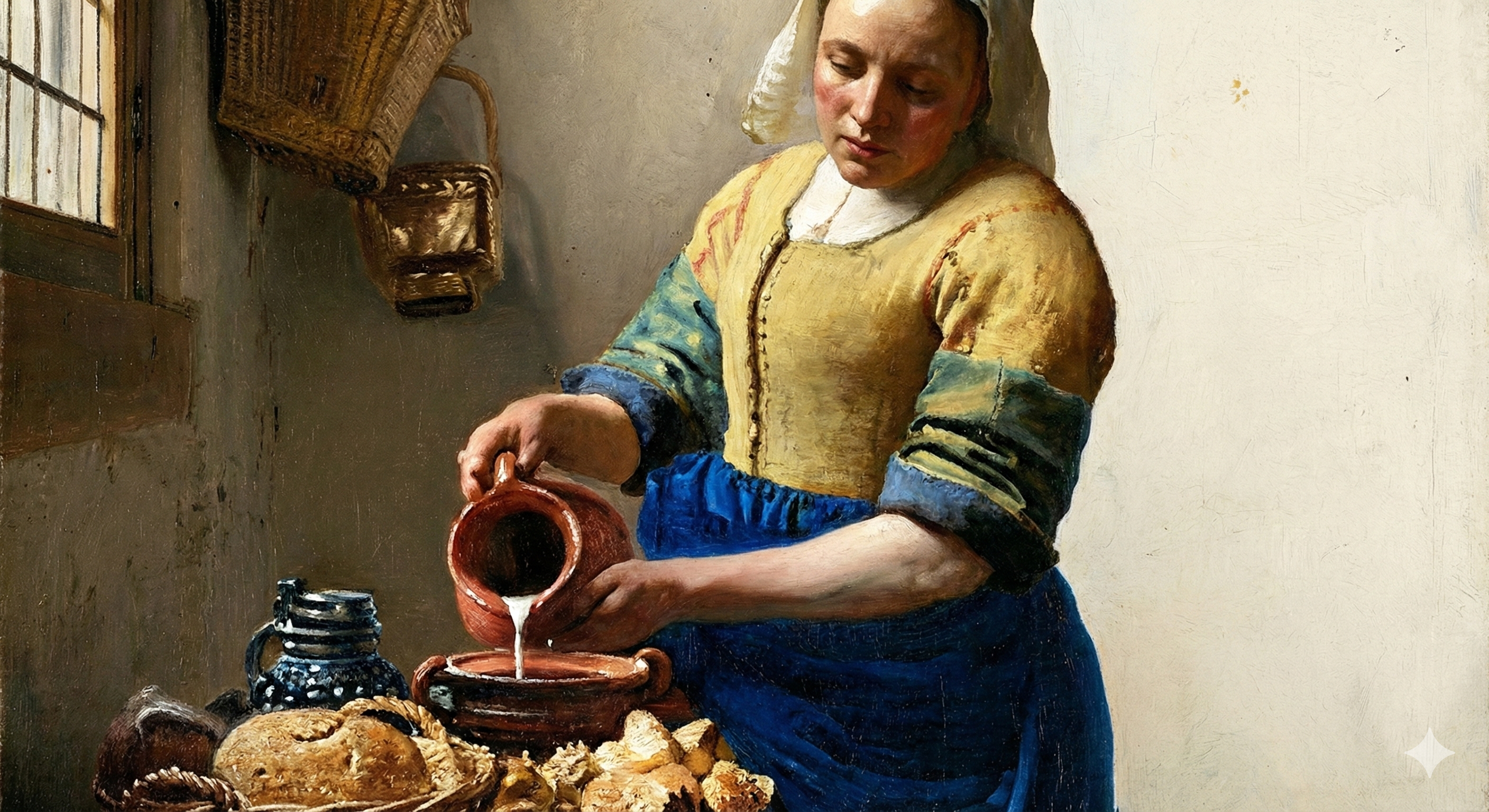
In the quiet corners of 17th-century Delft, a revolution was taking place. It was not a revolution of gunpowder or political upheaval, but one of optics, chemistry, and perception. When we stand before a masterpiece of the Dutch Golden Age today, we are often struck by a sense of hyper-reality—a feeling that the canvas is not a flat surface, but a window into a breathing world. This sensation is no accident; it is the result of a scientific approach to art that defined an era.
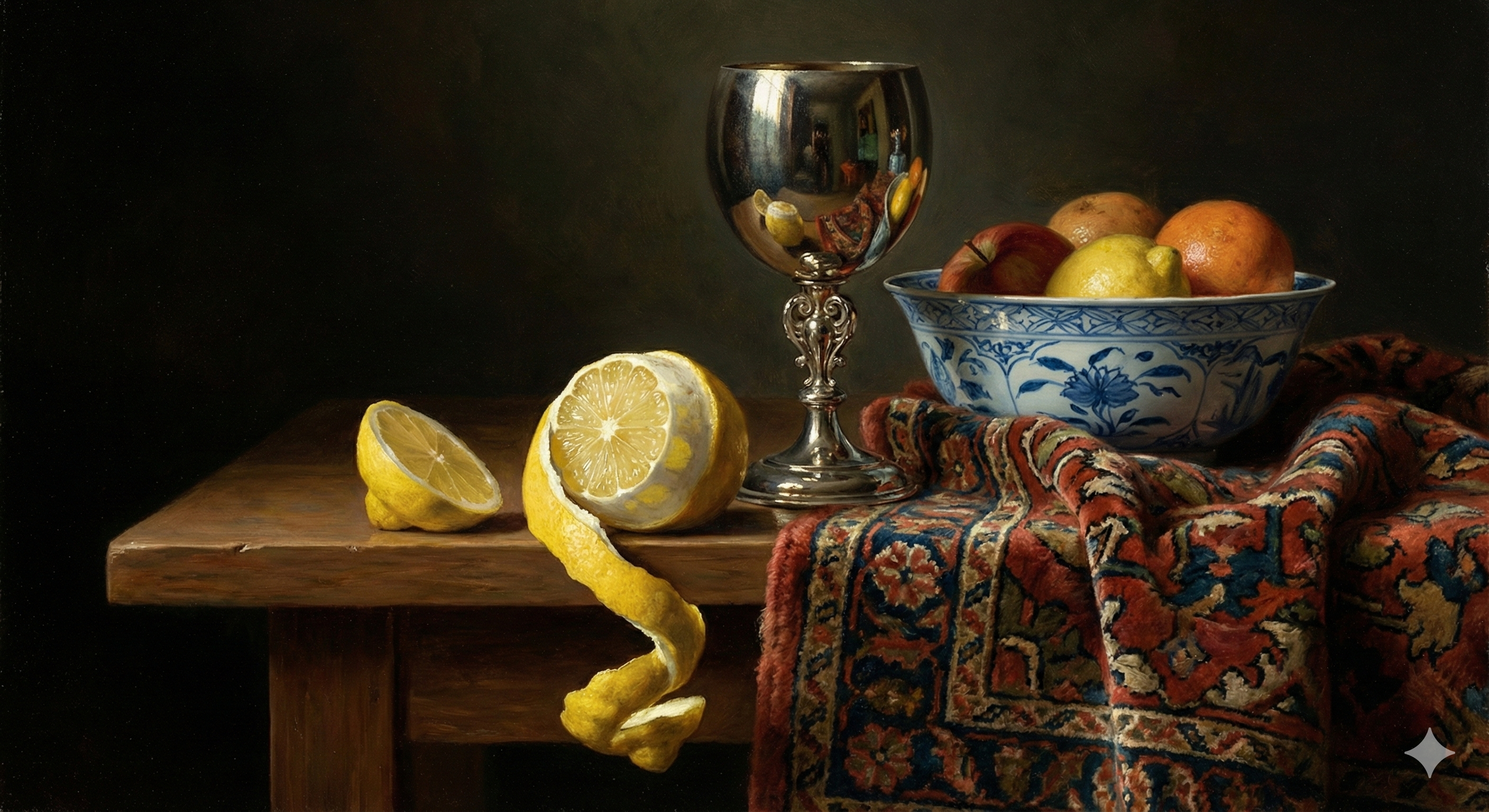
The Dutch masters, particularly Johannes Vermeer and Rembrandt van Rijn, were not merely painting what they saw. They were manipulating the very physics of light. Unlike their Italian Renaissance predecessors, who often idealized forms to achieve divine perfection, the Dutch painters were obsessed with the texture of the mundane. They sought the truth in a peeled lemon, the reflection in a glass of wine, or the rough weave of a servant’s apron.
To achieve this, many historians argue that Vermeer employed the use of a camera obscura. This optical device, a precursor to the modern camera, projected an image of the outside world onto a wall or canvas inside a darkened room. This theory explains the peculiar "out-of-focus" quality seen in some of Vermeer's foregrounds—the famous "circles of confusion" or halation spots of light that appear on metallic or wet surfaces.
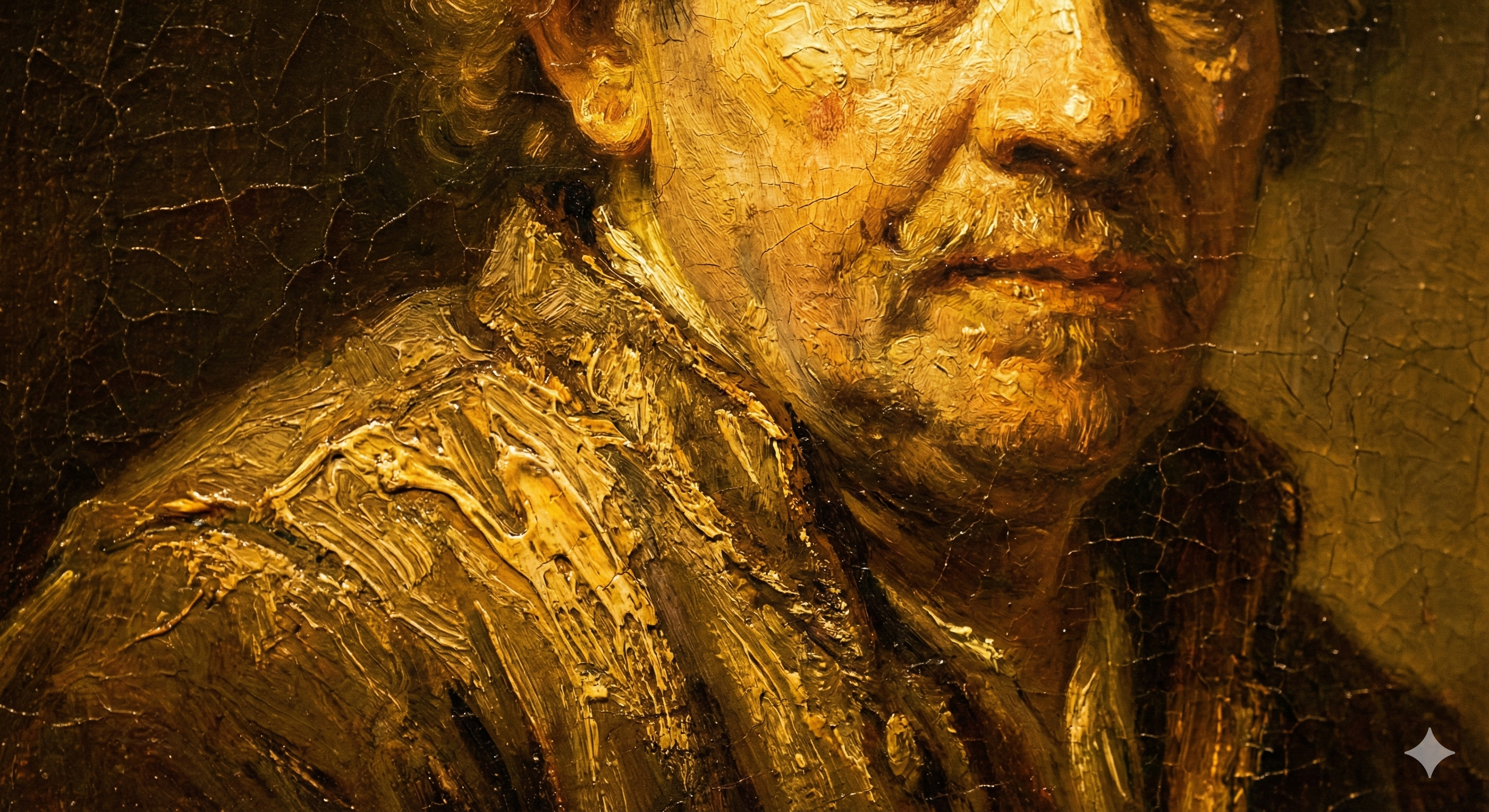
However, technology was only half the equation. The other half was chemistry. The specific luminosity of these paintings relies heavily on the layering of pigments. Rembrandt was a master of impasto—applying paint so thickly that it stood out from the canvas in relief. By doing so, the paint itself would catch the ambient light of the gallery, creating a three-dimensional sparkle that flat paint could never achieve.
"Light is not just a tool for visibility in Dutch art; it is the protagonist. It carries the emotional weight of the narrative."
Consider the cost of these colors. The deep, resonant blues found in Vermeer’s Girl with a Pearl Earring were made from lapis lazuli, a semi-precious stone imported from Afghanistan that was, at the time, more expensive than gold. Using such a material to paint the headscarf of an unknown girl was a statement of immense artistic confidence and economic power. It showcased the reach of the Dutch East India Company and the wealth that flooded into the Netherlands during this period.
The psychological impact of this lighting cannot be overstated. In Rembrandt's portraits, the light often emerges from a dark, undefined background—a technique known as chiaroscuro, pushed to its extreme limits (tenebrism). This focuses the viewer's attention entirely on the face and the soul of the subject, stripping away the distractions of the environment. It forces an intimacy between the viewer and the subject that feels almost intrusive, even four centuries later.
Today, modern digital restoration allows us to see these layers in ways the naked eye cannot. Infrared reflectography reveals the initial sketches beneath the paint, showing us the artists' hesitations and changes of mind. We can see where a hand was moved, or where a window was covered up to alter the lighting composition. These technologies do not diminish the magic; they deepen it. They show us that these masterpieces were not divine interventions, but the result of rigorous labor, constant correction, and an obsessive study of the physical world.
As we navigate our own digital age, saturated with filtered images and artificial enhancements, the honesty of the Golden Age feels refreshing. It reminds us that beauty is often found in the imperfect, the fleeting, and the interplay of shadow and light. The lemon peel will eventually rot, and the flower will wilt, but captured in oil, they remain eternal—a testament to the human desire to freeze time.